I was cautiously optimistic for Angles, the first new album from The Strokes in over five years. "Under Cover of Darkness" is a great first single, and possibly the catchiest song penned by the band since their debut Is This It (2001).
However, "Under Cover of Darkness" does not represent the rest of the album. The songs that comprise Angles can be grouped into three sections: 1) Two fun, upbeat opening tracks, 2) three songs that sound like they belong on Julian Casablancas' solo album, and 3) a mixed bag in the album's latter half.
And then, all of a sudden, it's over. The whole experience left me wondering what the fuck just happened. The album is only 34 minutes long, and while that's normally a good thing for a Strokes record (First Impressions of Earth was weighed down by its length), it feels like it never really got started.
The reggae-influenced "Machu Picchu" gets things off to a good start. It takes about a minute to really get into a groove, but the chorus is extremely strong.
As stated above, "Under Cover of Darkness" is the catchiest Strokes song in a decade. My only gripe is that the vocals are far too buried in the mix. I don't know enough about the physical process of how music is recorded onto CD and mass produced, but it seems like this is a technical issue and not an artistic decision. It's not a low-fidelity effect as on the band's first album; it's like the volume is too low. Then again, the effect is more noticeable in my car than on home speakers, so maybe I just need a new set of wheels.
"Two Kinds of Happiness," "You're So Right," and "Taken for a Fool" feel like they could have been lifted from Casablancas' solo album Phrazes for the Young (2009). That's not necessarily a bad thing, although it wasn't at all what I expected from a Strokes album that was supposed to be more of a collaborative effort than any of their previous work. Overall, though, they round out a very solid first half of Angles. It's not what I thought I was going to hear, but I keep wanting to play these songs again. This section of the album may not capture the listener's attention on a first listen, but these three songs have strong "grower" potential.
It's after this point where things begin to unravel. "Games" and "Call Me Back" halt the momentum built in the first half of the album. I don't begrudge the band their attempt to mix things up, but I didn't find either of these songs to be particularly interesting.
"Gratisfaction" somewhat rescues the tempo. The track could pass for a Billy Joel cover, and I guess that's okay.
"Metabolism" sounds like it was written for First Impressions of Earth. The guitars and drums create a menacing atmosphere, but it boggles the mind why Casablancas insists on droning on like this sometimes. The guy is a much better singer when he's not drawing every syllable out until his self-loathing ruminations are barely decipherable: "IIII.... waaaaant... to be... outraaaaageous / But insiiiide.... I knoooow... I'm plaaaain / Sooo plaaain." Ugh. Somebody give this man a hug. This is the kind of stuff that torpedoed some of the songs on the band's last album and his solo release.
Album-closer "Life is Simple in the Moonlight" is an interesting new direction, especially for a band that generally avoids ballads, but it doesn't really end in a This-is-the-End-of-the-Album moment. It's probably not fair to expect every Strokes record to end with a snarling rocker like Is This It's "Take it or Leave It," but Angles just feels like it's missing one last great song. "Taken for a Fool" probably would have worked better as the album closer.
It may sound like I disliked Angles, and really that's not true. It's just that I came into it with lowered expectations, and the band didn't really do much to prove me wrong. When you're talking about a band as great as the Strokes, that's somewhat of a bummer. Five years is a long time between records, though, and from various interviews the members of the band have given, it sounds like this album was tough to make. Casablancas, the Strokes' unofficial leader, purposefully withdrew from many of the recording sessions, claiming it was meant to encourage the rest of the band to be more involved in the writing process. In an interview with Pitchfork, guitarist Nick Valensi admitted "I feel like we have a better album in us, and it's going to come out soon." In that light, Angles is the sound of a band dusting off the cobwebs. I'm okay with that. I also think Angles will be one of those albums that gets better over time.
Anyway, enough of that. Since I know everyone likes the personal stories...
I got home from work tonight and immediately told my wife she'd like "Machu Picchu" when she asked me about the new album. I started the song and began to dance seductively (that's right, people, seductively)...
"It sounds like the other one," she said, referring to "11th Dimension," the synth-laden lead single from Phrazes for the Young.
"Hold on!" I said as she began to walk away, "You're going to miss the good part."
She was already halfway down the stairs, though, and all I heard was a yelped "No!"
Of course, this story is completely uninteresting to anyone who hasn't met me and my wife. (Side note: she has red hair and her name is Jenny. That pretty much makes her an indie rock goddess.) But I wanted to relate it for a few reasons: 1) It's the only way I can get her to read this blog, and 2) the point is that when it comes to Angles, your mileage may vary.
Angles is available in its entirety for streaming at thestrokes.com.
Better late than never, eh? In the inevitable winter music dropoff, i.e. the time between mid-December and - oh, I don't know - let's say March (don't get hung up on the timing; I'm just making this up as I type), it seems most musicians avoid putting out new releases. Maybe they think no one is paying attention during the holidays. Or maybe it's because everyone needs a break, and what better time to take one than Christmas? Nevertheless, this gives me some time to catch up on music I missed earlier in the year.
I overlooked Expo 86, Wolf Parade's third LP (and their last one, if the band's "indefinite hiatus" is a permanent one), when it came out on June 29, 2010. I was underwhelmed by its predecessor, At Mount Zoomer, and although I acknowledge that album is probably a grower that needed more time, it didn't get me excited for the band's next release. Perhaps because of that (or maybe because I happened to be getting married in June), I barely paid any attention to the album's leadoff single, "What Did My Lover Say? (It Always Had to Go This Way)."
For anyone who hasn't heard of Wolf Parade, the Canadian band is comprised of dual lead singers/songwriters Spencer Krug and Dan Boeckner, drummer Arlen Thompson, and guitarist/percussionist Dante DeCaro. Krug, who plays keyboard, had been involved with several other bands, most notably Sunset Rubdown. Boeckner, guitarist, also fronts husband/wife duo Handsome Furs. Thompson has been involved with Arcade Fire, and DeCaro was a guitarist and songwriter for Hot Hot Heat. So they're sort of an indie rock supergroup. The band first gained attention with their 2005 debut, Apologies to the Queen Mary, with At Mount Zoomer following in 2008.
Expo 86 opens with the crazy rantings of Spencer Krug. (The guy could be brilliant - at least everyone says he is - but I don't know what the hell he's singing about.) Something about a hammock, dreamcatchers, scorpions, and jumping over mountains like a gazelle. Yeah. The thing is, though, the song rocks. But even when it seems ready to explode into a storm of ferocious drumming, guitars, "oh oh ohs," and "na na nas," it almost disintegrates into nothing. For over a full minute in the song's midsection, it's as if Krug and the band forgot what they were doing. It's all just tension-building, though, for the eventual eruption into the song's titanic, energetic closer.
Likewise, Krug's "What Did My Lover Say" is a monster of a song. It snakes into your head and feasts on your brain. Because, you know...snakes are really just zombies with sharper fangs. Anyway, the band has pulled off somewhat of an amazing feat by crafting a song that is infectious without actually being catchy.
Random Thought, by the way: If Spencer Krug's voice is as distinctive as everyone says, why is it I can't tell him apart from co-lead singer Dan Boeckner? If anyone actually commented on these posts, I might get slayed for that comment, but at least it's honest. The dudes sound the same. You can usually pick out each guy's songs, though, as Boeckner's aren't insane. Maybe inscrutable, but not batshit crazy. Naturally, this lets us create a handy cheat sheet for when you find yourself listening to or discussing a Wolf Parade record:
Trust me, the insane/not-insane cheat sheet is usually foolproof. It has gotten me out of countless conversations where I just wanted to say, "Man, I don't know who the fuck is singing on 'Ghost Pressure.'"
Case in point. While Krug does his best Bowie impression on "What Did My Lover Say," Boeckner's "Palm Road" reminds me of Springsteen. Now, if you had to fit Bowie and Springsteen into our cheat sheet, where are they going to go? Yep. By the way, "Palm Road" doesn't actually sound anything like Bruce, but his spirit is there. Or the mythology of his spirit. Something like that. I grew up in Jersey; I'm allowed to make random Boss-comparisons. (Or maybe that means I'm supposed to avoid them?)
That being said, Boeckner contributed some of the truly standout tracks on this record, including the wistful yet upbeat "Yulia," rocking stomper "Pobody's Nerfect," and soaring "Little Golden Age."
Overlooking this album was a mistake. Expo 86 is a triumphant success, combining elements of each bandmembers' work in their various side projects into a unified whole. Hopefully the band's hiatus is not a permanent one, as Expo 86 shows they were just starting to find their groove.
What Did My Lover Say (It Always Had to Go This Way):
People who review music need to justify why their assessments are worth being called something more than just another opinion. The most common way to do that is to spend several paragraphs attempting to identify an artists' influences and inspirations, often without really knowing where the artist was coming from when he or she wrote a particular song. This sickness seems to particularly afflict reviewers of Ryan Adams' music. (Just look at anyone else's review and you'll see what I mean.)
Of course, I'm just as guilty of this as anyone else. After all, without giving you some information you didn't already know, other than "it's good" or "it's bad," what's the point? Luckily, I think, my wife is mostly immune to this. Whenever I ask her what she thinks of a song, she'll usually say "meh" or "it's okay." And that's if she likes it. When she hates a song, I usually get a "You like this?" (No, honey. I'm listening to this song because I hate myself.) Anyway, when listening to "Numbers" on the IV disc of Ryan Adams & the Cardinals' new release III/IV, I thought aloud, "Who does this sound like?" She replied, in her typically matter-of-fact way, "It sounds like him. If you played this for me and I didn't know it was him, I'd say it sounded like him." So there's that.
Interestingly enough, III/IV really does not sound like anything you've heard from Ryan Adams & the Cardinals. The band's first two records were alt. country masterpiece Cold Roses and 60s-country inspired Jacksonville City Nights. Easy Tiger and Cardinology, while still country-tinged, were more commercially appealing singer/songwriter folk rock albums.
By contrast, III/IV rocks out. The easy comparison is to Adams' 2003 solo album Rock N Roll, without the underlying bitterness borne of a major label telling him he couldn't release the album he really wanted to (Love is Hell). But this feels more like the demos recorded under the moniker Sad Dracula, briefly released online in 2006. For whatever reason, Adams' demos and unreleased material have always felt unrestrained in ways his more recent official releases may not, and finally we have a record that exemplifies this. Maybe Lost Highway (the band's former label) really was holding Adams back as much as he always said it was. It's no surprise, then, that III/IV plays more like a Cardinals live show (at least those of the electric, "Red Cave" variety) than any of the Cardinals' studio releases over the past 5 years. It's like we've been given a snapshot into the essence of this band at the height of its creative power.
III is the more straightforward rock record. All those positive things critics said about Easy Tiger - concise, focused, etc. - can just as appropriately be said about III, albeit for a much more upbeat sound. With roughly 60 songs from which to choose, the band clearly took its time to find the right tracklist for each LP. The story told by Jamie Candiloro on Adams' PAX-AM label's website rings true:
"Probably the thing I remember most about these session was a chart system that we used on the back wall of electric lady [note: Electric Lady is the studio in which III/IV and Easy Tiger were recorded - GTI] to keep track of things. It had album titles and song names with the song’s progress. I think at one point we had four albums and even a b-sides list! We were constantly moving songs around to find the perfect sequence. One album that started to form seemed like a bit of a folk record to me. It was around thanksgiving that I presented a cd that was essentially the cuts that would become “easy tiger”. My version had sixteen songs though! Another record that was at the front of our attention was something Ryan called vol. 3 & 4. The idea being that “cold roses” was vol 1 & 2 and this was a logical step that the cardinals had taken forward as a band effort. The tracks shared the democratic process of a band, which always gives a record more depth to me."
"Breakdown Into the Resolve," arguably the best track on III, opens things up on a strong note. "Hi, hello, it's me again ... You probably heard I went away" Adams announces, and one could easily forget this was recorded 2007 and he's not referring to his brief hiatus from music after the Cardinology tour. Adams seems to take a parting shot at Lost Highway, or the criticism he endured for releasing three albums in 2005: "So, it's one for every year / It's pitiful what I hold dear I throw away." Please, Ryan, don't listen to the naysayers. Keep doing what you love.
"Dear Candy" continues the story that began in Jacksonville City Nights' "Dear John," this time from John's perspective. "Dear John" insinuated marital infidelity: "I knew what you were doing / That summer when Candy came around." Finally, John gets to explain himself and rebuffs Candy: "This was all a fantasy of yours / This was just a dream you had / And I was never here." Maybe John is in denial about his own transgressions. Maybe he's an innocent victim of an obsessed stalker. Either way, Adams hasn't shared a story this juicy since 29's "Carolina Rain."
John's defiance is replicated elsewhere, such as on "Lovely and Blue," a scornful word of warning to an ex-love's new man: "You're the one she thinks she wants / She thinks she wants the world / It's hers and you'll never get through."
As good as the III-halfis, IV is where things start to get really interesting. The band takes more chances with genre-switching and complex song structures, resulting in a more enjoyable experience. "Numbers," with its singalong "We're fucked!" chorus, starts out as a New Pornographers-esque punk song before seamlessly shifting into a sweet, slow melody sung by Catherine Popper. Likewise, "Icebreaker" dabbles in metal, until it surprises with a soaring, anthemic middle section. "Sewers at the Bottom of the Wishing Well" fakes out the listener with an intro that sounds like well-worn Cardinals territory before erupting into a snarling rocker featuring one of the best lyrics on the record: "My heart isn't black / It's just dirty from the floor." "Typecast," with its slide guitar and lovelorn subject matter, could have fit in nicely on Easy Tiger or Cardinology, although it's sequenced perfectly here. And "P.S." is a slice of pure power pop goodness.
The highlight of IV, and perhaps the entire double album, is the lighthearted and charming "Star Wars," Adams' wish for a girl to love him as much as he loves Lucasfilm's epic space odyssey.
It really says something about the talent of Ryan Adams & the Cardinals that a bunch of their unreleased tracks from 2006/2007 comprise the best album of 2010.
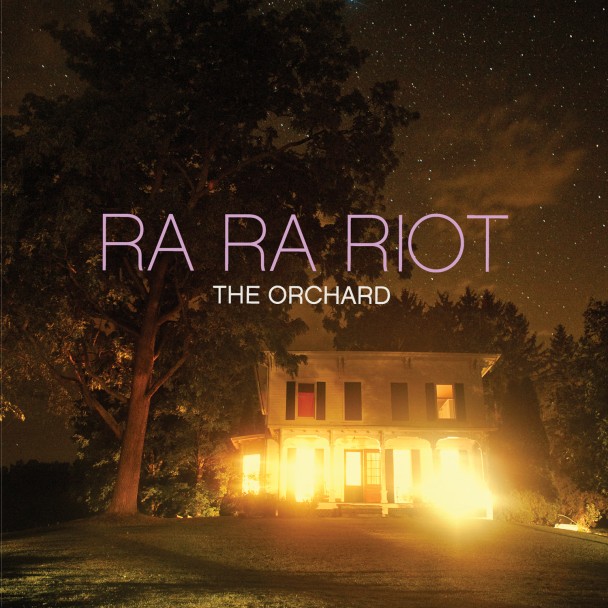
The Orchard is not as uniformly upbeat and joyous as Ra Ra Riot's debut The Rhumb Line, which is somewhat of a surprise, given that the band does breezy upbeat chamber pop so well. Still, there's something unexpectedly captivating about the band's new album, which represents not so much a change of direction as it does a commitment to exploring a greater variety of arrangements and moods.
In the pretty, melancholic opener "The Orchard," lead singer Wesley Miles is complemented by an achingly beautiful combination of Rebecca Zeller's violin and Alexandra Lawn's cello. The song serves to re-orient the listener's expectations: This is not going to be a rehash of the first record.
Still, it transitions perfectly into lead single "Boy," which sounds like it could have been lifted from The Rhumb Line. While this is Ra Ra Riot's bread and butter, "Boy" is the result of a more experienced, self-assured band. No matter what direction they pursue in the future, Ra Ra Riot will probably always have the ability to write a great song like this.
"Boy" is not the only upbeat song on the record. The hyper "Too Dramatic" augments the band's typical sound with retro synths. "Shadowcasting" bounces along before delivering a soaring chorus. In both songs, Miles sounds more confident and mature than ever. His growth as a front man is perhaps The Orchard's greatest accomplishment.
That being said, The Orchard also marks the first Ra Ra Riot record to feature cellist Alexandra Lawn on lead vocals (on "You and I Know"). It's always refreshing when the female singer in an indie band does not sound like every other female singer in an indie band (that is, sort of cutesy). One of the album's highlights, "You and I Know" smolders like Stevie Nicks at her most heart-wrenching.
Despite the overwhelmingly positive comments above, The Orchard is a bit of a grower, especially for anyone expecting the carefree joy of the band's debut. After repeated listens, though, it is clear that Ra Ra Riot have defied the so-called sophomore slump and crafted a record that exceeds its predecessor.
The characters in Arcade Fire's third album are suffocating. The Suburbs describes the disappointment of growing up in a modern, middle class life, forced to focus more on punching a clock than being alive. Much of the imagery is viewed through the driver's seat of a car, winding through well-traveled streets in search of lost youth, meaning, purpose...anything more than the stifling monotony of everyday existence. The album is pervaded by a serene melancholy, a yearning for the joy of youth mixed with a recognition that we can never go back to it.
Lyrically, the album is remarkably cohesive, with themes (and even particular phrases) introduced in the opening tracks recurring later in the album. The title tracks touches on many of the topics explored later in greater depth, acting almost as a table of contents for the rest of the album. This is a level of discipline that is largely absent from the works of Arcade Fire's peers.
Not all themes on the album are confined solely to the suburban experience. In "Deep Blue," lead singer Win Butler expresses apprehension about the dehumanizing aspects of modernity. Through a reference to the defeat of chess champion Garry Kasparov by the computer Deep Blue in 1996, the song ponders the impending uselessness of humanity in the face of increasingly sophisticated technology. Butler doesn't let us forget, though, that this is something we've brought upon ourselves, by our increasing preoccupation with technology that ultimately alienates us from the world and each other:
Hey, put the cellphone down for a while. In the night there is something wild. Can you hear it breathing? And hey, put the laptop down for a while In the night there is something wild I feel it, it's leaving me.
This loss of feeling is another recurring theme on The Suburbs, first appearing the opening title track ("I can't believe it, I'm moving past the feeling"). Butler wishes for a child so that he can "hold her hand, and her show some beauty, before this damage is done"; or, in other words, before adulthood steals it all away from him. In "Ready to Start," he'd "rather be alone, than pretend I feel all right." And in "Modern Man," he "feel[s] I'm losing the feeling."
Still, there are places when "the feeling" hasn't entirely been stamped out, namely in the darkness of sleep (as in Sprawl II: "but late at night the feelings swim to the surface"). In Half Light, "the night tears us loose, and in the half light we're free." And even though Butler claims to have moved past the feeling, he admits, "In my dreams we're still screaming."
It's a dark sentiment, but perhaps screaming is better than feeling nothing at all.
Imagine a Saturday afternoon in May on the first comfortably warm day of the year. Your favorite book rests in your lap. Kids are playing frisbee in the park. A gentle breeze caresses your cheek. This is the best day of the year.
On the surface, the preceding paragraph has little to do with Gorilla Manor. Local Natives are not content to sit still and enjoy the world from a park bench. Instead, the evocative songs on their debut album form a sonic adventure that needs to be experienced in its entirety. It's an effect that cannot be reproduced by simply posting two tracks (although I'm still going to do that). Local Natives find joy in the wonder of discovery, and the listener cannot help but be pulled along for the ride.
That sense of adventure is reinforced through the band's use of percussion. Unlike bands that may have a drummer to simply keep the beat, Local Natives' Matt Frazier is featured as an anchoring backbone for the theme of each composition. Just as any good adventure involves considerable walking (or running, skipping, jumping), percussion on Gorilla Manor is the foundation on which all else is built. Percussion gives movement and fluidity to the songs, as in "Camera Talk." Opening-lyric "We're running through the aisles" is a line both heard and felt. Indeed, the best tracks on Gorilla Manor are those that have Frazier leading the way.
That being said, Local Natives' sound is dominated by pretty vocal harmonies, such as on Talking Heads cover "Warning Sign." Elsewhere, the vocals of "Cubism Dream" suggest Jeff Buckley's more subtle moments. The band has also drawn comparisons to Fleet Foxes, Grizzly Bear, and Ra Ra Riot (with the latter perhaps more for its similarly joyous percussion).
All of these elements are pulled together on the standout opener, "Wide Eyes." Propulsive beats, an insistent harmonized refrain about self-discovery ("Oh, to see it with my own eyes"), and just when the song doesn't seem to know where it's going, it explodes in burst of guitars. It's an apt summary of one of the finest debuts of the year.
I was apprehensive when I heard that We Are Scientists were releasing a new album. The band's 2006 major label debut, With Love and Squalor, was a blistering set of post-punk revival tunes about getting drunk and waking up on an unfamiliar floor, and one of my favorite records of 2006. However, its follow-up, Brain Thrust Mastery, took a step away from this scene towards a more 80s/new wave revival vibe. I suppose this makes sense, as despite being an American band, We Are Scientists have had more success in the UK, where they fit in nicely with British bands such as the Franz Ferdinand, Kaiser Chiefs, Maximo Park, and the Arctic Monkeys.
On the surface, lead singer Keith Murray hasn't changed his focus at all. There is no shortage of inspiration from girls and drunken nights, and the bad decisions that arise from combining the two, but the lyrics also suggest a deeper reading. Particularly, "Rules Don't Stop" may be less about youthful defiance (as the chorus "rules don't stop me / don't stop me" might suggest) and more a response to the band's critics:
Don't be alarmed, it's not the end of the world. If we're breaking the rules, it's fine. I disregard this kind of problem every time.
It's not as if it's gonna kill anyone. If there's no victim then there's no crime. Just draw another if you think we've crossed the line.
(Or maybe it's just about drugs...)
But Barbara has taught me a lesson, one which I probably should have learned by now: 30-second iTunes/Amazon clips can be misleading. Despite my initial impressions that the album would be dominated by the synths prevalent on Brain Thrust Mastery, it actually manages to incorporate the energy of With Love and Squalor, as in "I Don't Bite" and "Nice Guys."
Part of the reason for that is a beefed-up rhythm section. After the departure of drummer Michael Tapper, We Are Scientists employed session musician Garrett Ray for Brain Thrust Mastery. For Barbara, they recruited former Razorlight drummer Andy Burrows, and the change seems to have revitalized the band. The mid-tempo tunes from Brain Thrust Mastery are mostly gone, and the band plays to its strengths: crafting bouncy, energetic rock songs.
While a part me still misses With Love and Squalor, it's not like that album has gone away, and the band has clearly gotten better in the intervening years. Barbara is a hybrid of the band's last two albums, and as a result, just might have more staying power than anything they've released previously. It'll be interesting to see where they go next.
Buried within All in Good Time is Barenaked Ladies' hardest-hitting record, if you take the time to find it. The messy departure of vocalist Steven Page weighed heavily on the band while writing these songs, and this is no more obvious than in those sung by former co-lead (now just lead) vocalist Ed Robertson, particularly on the ballad "You Run Away," angry rocker "I Have Learned," and jaunty "Golden Boy."
The trouble is, though, that the potent bitterness of this "breakup" album is diluted by more introspective, outside-looking-in contributions from keyboardist Kevin Hearn and bassist Jim Creegan. Undoubtedly, the remaining members made a decision to feature every vocalist in the name of band solidarity. But while their combined five songs provide a probably more accurate/complete account of Page's exodus, they divert attention from the more cohesive picture presented by Robertson.
An argument can be made that it's important to include these perspectives, but the record suffers artistically for it. While Creegan is a revelation (where have they been hiding this guy so long?), Hearn has written better songs, particularly on Barenaked Ladies Are Me/Are Men. Indeed, even Hearn's best track from these sessions (at least among those that have been released), "Let There Be Light," was inexplicably relegated to vendor-specific bonus track.
Likewise, the track order gives the impression that the record is more mid-tempo, burying Robertson's heavier tracks in the second half. For an album with so many rockers, the listener should not need to wait seven tracks to hear the first one. With that in mind, I'd like to propose an alternate track order:
1. You Run Away
2. Ordinary
3. Four Seconds
4. I Have Learned
5. On the Lookout
6. Every Subway Car
7. Summertime
8. Let There Be Light [iTunes bonus track]
9. How Long
10. Golden Boy
11. I Saw It
12. Moonstone [Amazon bonus track]
13. The Love We're In
"You Run Away" retained the leadoff track position only because there are no other songs in from these sessions that have the feel of an album-opener. Ideally, I would have like to put it as track 3 or 4, the typical location of a ballad radio single. Either way, I would have released "Every Subway Car" as the lead single, with "You Run Away" as the follow-up.
Still, this tracklisting achieves a stronger rock feel than the original All in Good Time, while retaining vocal contributions from Hearn and Creegan. For a shorter, tighter album (11 tracks), any two of "On the Lookout," "I Saw It," or "Moonstone" could be removed, but I think that pushes the album too far into Robertson-solo territory. After all, it's supposed to be a Barenaked Ladies album.
Either way, with the modified album above, reviewers could confidently call All in Good Time the hardest rocking record in the entire BNL catalog, moreso even than Stunt or Maroon. That's the review I'd like to give, and it'd be accurate with the original version if your attention is focused on the latter part of the record. It's frustrating, too, because notwithstanding a few logistical missteps, All in Good Time is the best Barenaked Ladies album in a decade.
Gold Motel is the lovechild of Greta Morgan (formerly Greta Salpeter) of The Hush Sound, members of This is Me Smiling (Dan Duszynski, Mike Minx, Adam Coldhouse), and Eric Hehr of the Yearbooks. Their debut LP was inspired by Morgan's 2009 trip to California, which is abundantly clear from the first notes of album-opener "We're on the Run," or a standout track like "Safe in L.A." The band evokes a sound similar to the Beach Boys and the Mamas and the Papas, or more contemporary acts such as She & Him, latter-day Rilo Kiley, or a happier Anna Nalick.
Safe in L.A.:
Duszynski, Minx, Coldhouse, and Hehr are a refreshingly positive influence, channeling Morgan into more upbeat arrangements than one might expect from other female-fronted summery 60s throwback bands. Imagine if Zooey Deschanel and M. Ward spent less time writing sugary sweet pop songs and more time rocking out - well, they'd sound like Gold Motel. Summer House is damn catchy, and feels like a natural progression from The Hush Sound's last album, Goodbye Blues. On that album, it seemed like the band was trying to make a statement that it was a Serious Band. Unfortunately, this played against The Hush Sound's youthful exuberance, which was always its greatest strength. It's no surprise that the best songs on Goodbye Blues (e.g. "Honey" and "Love You Much Better") wouldn't be out of place on Summer House.
Summer House:
Minor disclaimer: I don't mean to disparage Goodbye Blues. I liked that record, and if you're interested in Gold Motel, you probably will too. It's just that Summer House is so much more carefree. The poignant loneliness that occasionally emerged in The Hush Sound's music is nowhere to be found here (with the possible exception of "Who Will I Be Tonight?").
This shift is a result of what seems like a conscious decision to downplay the piano (always a beautifully melancholy instrument) in favor of sunny guitars. Piano's minor role on this record is surprising, though, considering Morgan is a classically-trained pianist, and This is Me Smiling play a style of piano-driven power pop similar to that of a more energetic Ben Folds Five. Still, when the summer of 2010 begins to fade, I'm confident we'll look back on Summer House as one of the most fun records of the season.
In the 14 years since 1996, there hasn’t been anything quite like The Verve Pipe’s Villains. It’s not the album’s swagger or its punch; other bands have very successfully emulated both. It might have something to do with that funny movement that developed in the early 2000s, when a groundswell of angry/sad, often tattooed men with high, somewhat childlike voices remarkably drowned out the adult males in rock music. (Yes, I’m talking about emo.)
Every time I listen to the title track from Villains, I’m blown away that I used to hear this song on the radio. It's the kind of song I always wish bands would release as singles but never do. A brooding rocker about the media’s elevation of criminals to celebrity-status, “Villains” is not a catchy song. The insistent refrain, “See how they twist and shout,” is more harpoon than hook. And although the song didn’t track higher than #22 on rock radio, I still find it amazing that it was released as a single at all. Only in the 90s would a major label even consider releasing it as the follow up to a smash like “The Freshmen.”
Villains:
Speaking of The Verve Pipe’s only #1 hit, it must be bittersweet for a band to write its best song so early in its career. Songs like “The Freshmen” are truly once-in-a-lifetime gems that only very, very luckiest songwriters stumble upon. The guys in TVP had to know they could never top it. “The Freshmen” first appeared on the band’s 1992 debut indie release, I’ve Suffered a Head Injury. It was strangely removed from the album’s second pressing released later that year, was left off the 1993 follow-up Pop Smear, and then got reworked for Villains. Even then, it was not released as a single for a full year after Villains hit stores, preceded by minor hits "Photograph" and "Cup of Tea." Years later, Vander Ark admitted that the story of his best friend’s callous treatment of a girlfriend who had an abortion was actually autobiographical (albeit without the suicide).
While Villains immersed itself in the distorted, heavy guitars of mid-90s post-grunge, it added subtle layers of texture, such as the keyboards in “Penny is Poison,” a pretty but somber tune about resignation to reaping what we sow. While Penny may be awful to the song's narrator, he accepts it ("Penny is poison but I don't mind), admitting that he's been just as awful to other women ("Starving the love of the marvelous / I was the Penny to previous").
Penny is Poison:
Indeed, Villains is pervaded by similar themes of numbness and disinterest. The characters are world-weary, but rather than grow bitter, they are afflicted with ennui. They have given up. The subject in "Villains" begins to lose interest in the "villain on the cover / of every major magazine" by the simple act of a dropped subscription card (perhaps also a comment on making money off the celebration of evil?). In "Drive You Mild," Vander Ark acknowledges he "should drive you wild," but settles for underwhelming. Elsewhere, he "scraped the bargain basement / bought a lover less than fantastic / Spoke to me barely, if at all." Whether in love or grander themes, the album as a whole suggests that the true villains are within us.


 Posts
Posts